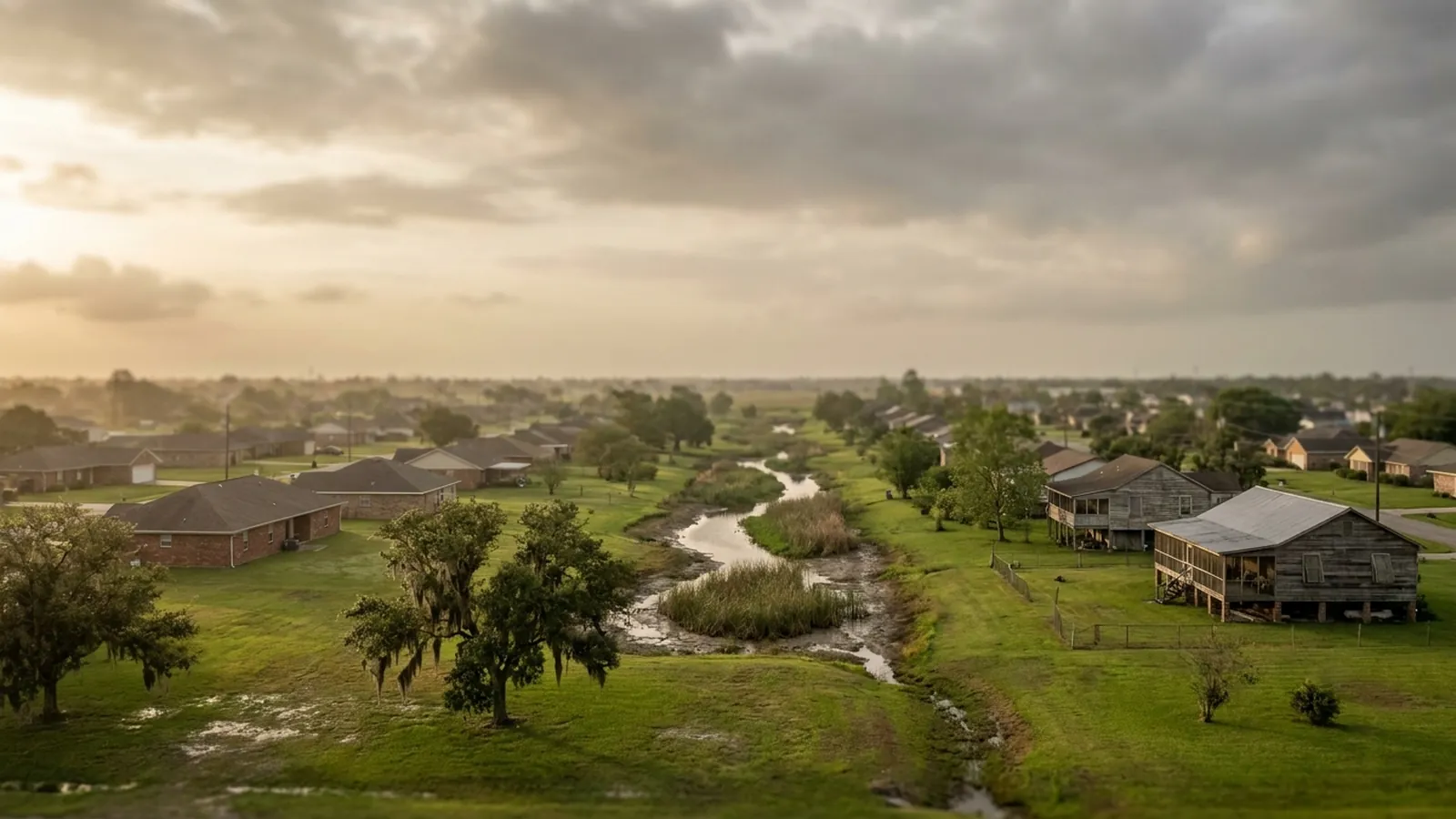
Nine foundation services for Lafayette, priced: subsurface drainage $1,500–$6,000, pier-and-beam releveling $2,500–$9,000, timber repair $1,500–$8,000, concrete piers $1,200–$3,000 each. Site visit free.
Outside the house
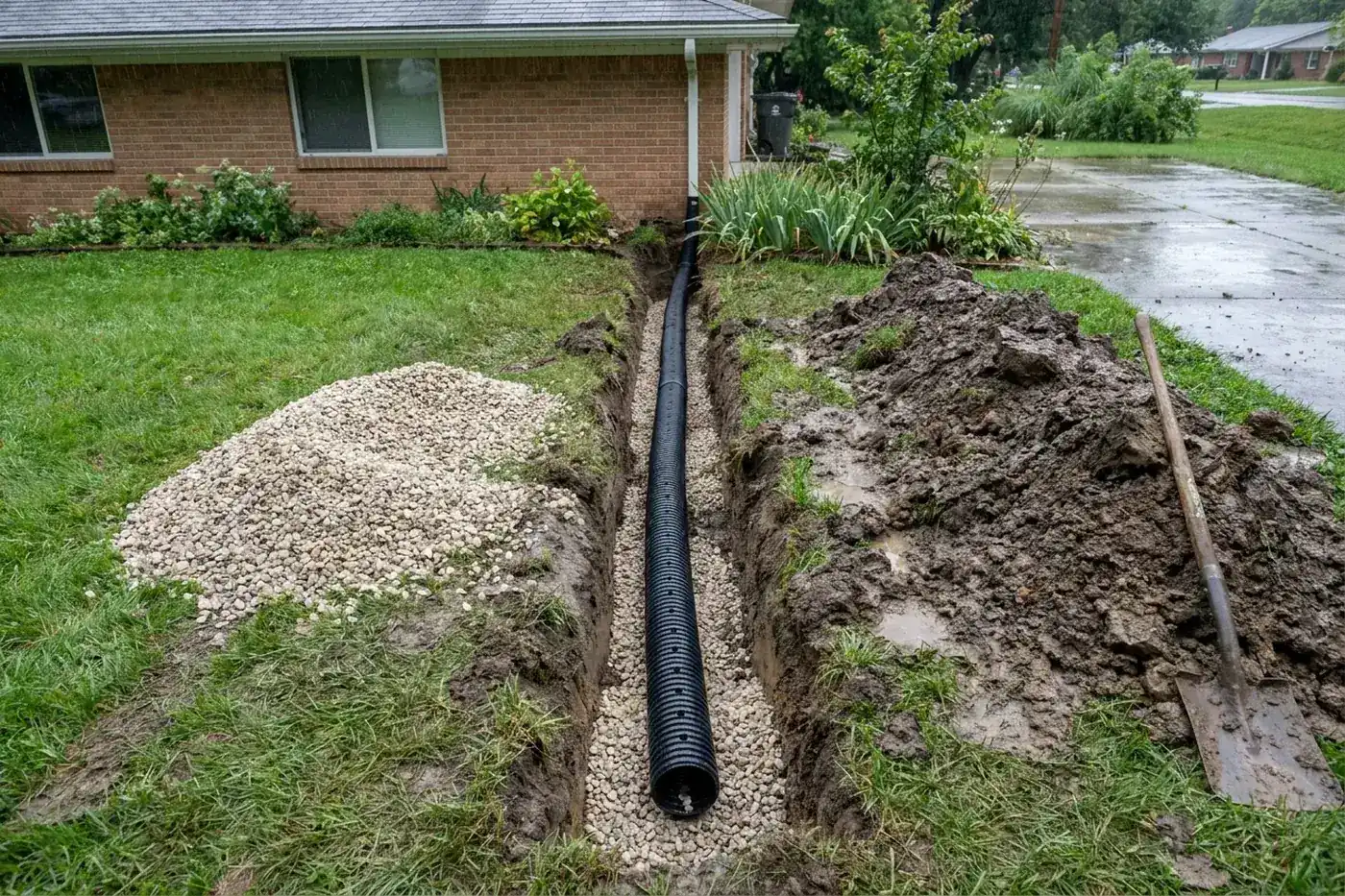
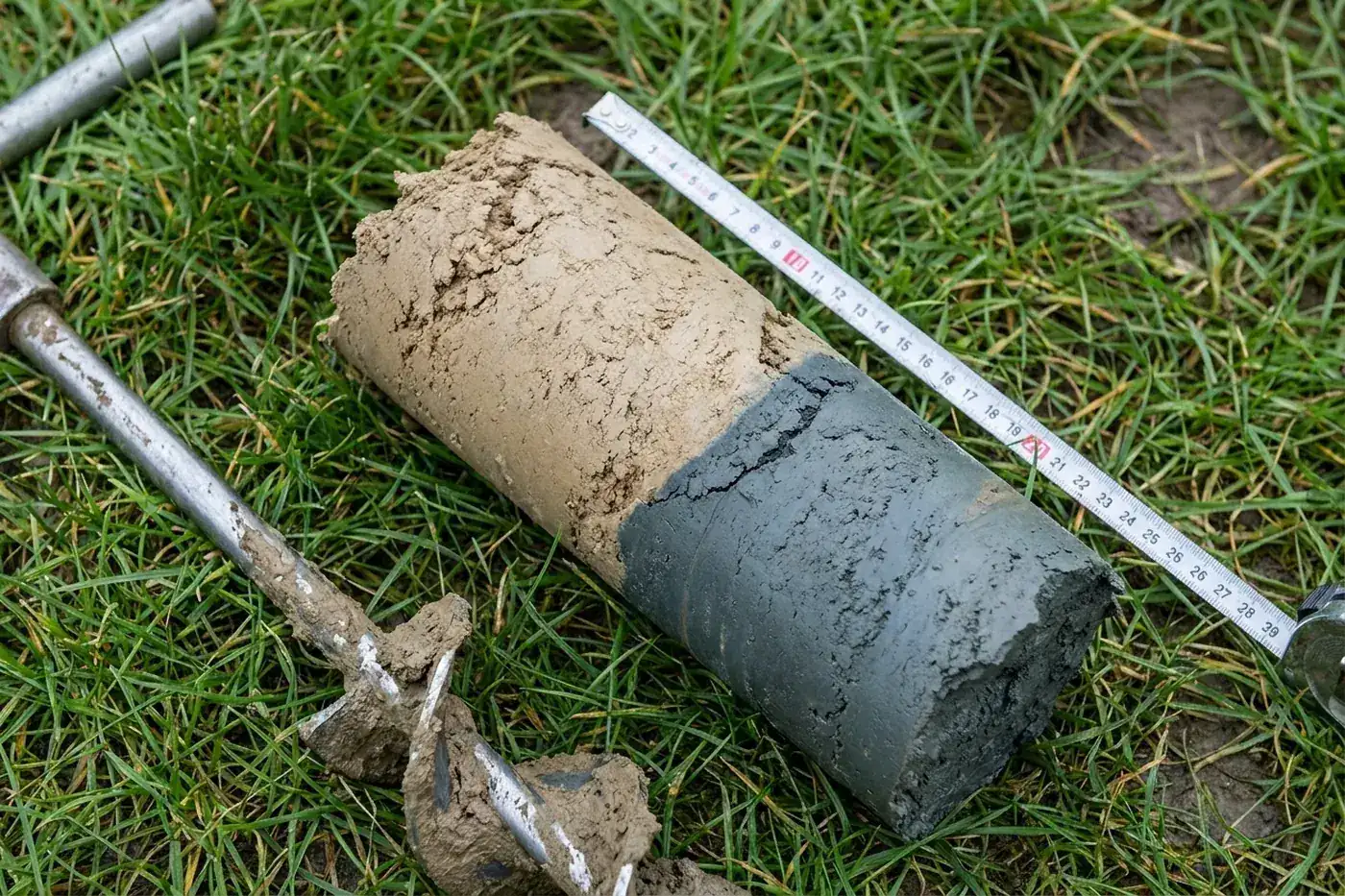
Where the cause is. Water perches on a dense horizon about fourteen inches down and cannot drain through it or, on this terrain, away sideways. Subsurface drainage gives it somewhere to go, and on a large share of local houses that is the entire repair. Whether insurance responds is worth reading first: saturated ground and termite damage are both usually excluded. Where two scopes disagree, an independent engineer is who settles it.
Underneath the house
Where the consequence is. On raised construction, releveling corrects supports that settled at different rates, and timber repair deals with what damp did to sills and joists. On slab construction, concrete piers carry the load past softened ground. Settlement repair sets out why perched water, not shrink-swell, is the mechanism here. A raised house has no weight to drive against, which is why helical piers are usually the workable option here.
Which one your house is depends on how it was built
Raised and slab construction fail in opposite ways and share almost no repairs, so that question comes early. It is usually answerable in ten seconds from the back of the house.
Water That Cannot Leave
A permeable top over a dense floor, and a house sitting on the wet part.
Subsurface Drains
The primary repair on this ground, not a line added to the bottom of a piling quote.
Pier & Beam Releveling
Acadiana's raised stock fails by sloping and bouncing rather than by cracking.
Concrete Piers
For slab houses where saturated ground has genuinely stopped carrying the load.
Sills & Joists
Rot and insect damage in the timber closest to ground that never dries.
Why Water Stands
There is a layer about fourteen inches down that rain cannot get through.
Raised or Slab?
Acadiana has both, they fail in opposite ways, and the repairs share almost nothing.
Termites & Structure
What damp ground invites, what we repair, and the part that is not our trade.
Cost Guide: Foundation Repair Prices in Lafayette
Two halves — taking the water away, and supporting what the water softened.
Symptom to service
| What you have noticed | Where the work is | The service | Range |
|---|---|---|---|
| Water standing in the yard for days | Outside | Subsurface drainage | $1,500–$6,000 |
| Floors sloping or springy underfoot | Underneath, raised | Releveling | $2,500–$9,000 |
| Soft floor near an exterior wall | Underneath, raised | Timber repair | $1,500–$8,000 |
| Cracking and doors out of square | Underneath, slab | Concrete piers | $1,200–$3,000 each |
| A termite report mentioning damage | Underneath, raised | Structure, after the pest trade | $1,500–$8,000 |
| No idea, just want it looked at | Both, free | The site visit | Nothing |
Outside comes first
Support installed while the ground stays saturated is support on ground that carries on softening everywhere the piers are not. That sequencing is the argument this whole site exists to make, and the pricing for both halves sits on the cost guide.
Working out which list applies
Not sure which one you need?
Most people arrive here having noticed one specific thing rather than knowing a service name: a door that stopped latching this season, a crack that keeps reappearing after it is filled, a floor that feels out of level near one wall, brick opening in a stair-step above a window, or a gap under a skirting board that was not there last year. Any of those is a reason to have someone look, and none of them is a diagnosis on its own. What causes them differs, which is why the visit comes before the quote.
Which of these do I need?
Almost everybody needs something from the outside list. Whether you also need something from the under list depends on whether the structure has already moved measurably, which is what the floor levels establish.
Can the outside work be enough on its own?
Regularly, and it is the cheapest outcome available. Where the water is clearly perching and the floor comes back within construction tolerance, drainage is the whole scope and there is nothing structural to sell you.
Why split it that way rather than by symptom?
Because the split is real. Work outside the house addresses why the ground softened. Work underneath addresses what happened while it was soft. They are different trades on the same job, and quotes that blur them are hard to compare.
Which of these do I actually need?
Start from what you have noticed. Sticking doors and sloping floors point at movement and a measured evaluation; a crack you can see daylight through points at repair; water standing against the house after rain points at drainage. The elevation survey settles it, and it is free.
Book a free Lafayette site visit
The single most useful thing you can tell us is what your yard does after heavy rain — whether water stands, for how long, and in which corner. On this ground that observation narrows the diagnosis further than any description of a crack. Say whether the house is raised or on a slab too. Reply the same working day.